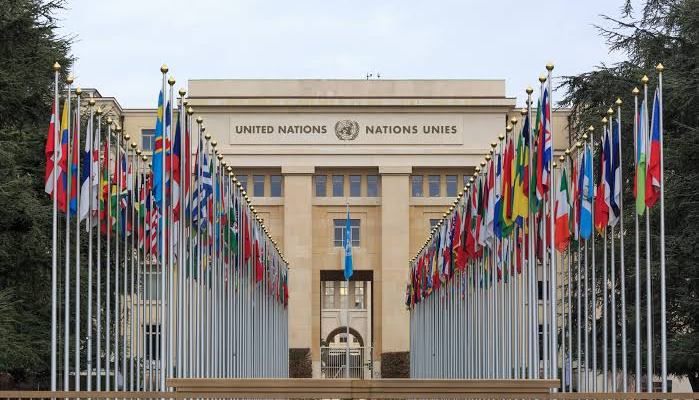
The Westphalian world order overemphasizes on National Sovereignty as a central tenet around which international relations are carried out. Some states have erroneously assumed this Sovereign immunity under International law to be a free pass, perhaps even an amnesty protecting them against the consequences, if they happened to act with caprice against their very own populace. The genocides in Yugoslavia and subsequently Rwanda highlighted the callousness with which certain states could act, transgressing the inherent rights of an individual against state oppression. This necessitated intervention, in contravention to the concept of State sovereignty under the UN Charter. To lend legitimacy and provide sound legal basis for such international intervention the doctrine of Responsibility to Protect (hereinafter ‘R2P’) was evolved.
In 2001the Arab Spring protests that had rocked Egypt and Tunisia finally reached Libya. The Libyan General, Muammar Gaddafi, equated the protestors to “cockroaches.” This alarmed the international community owing to the fraught history of the phraseology. During the Rwandan genocide, the minority Tutsi population had been equated to cockroaches that were sought to be exterminated. Soon, the Libyan air force carried out bombings on the protestors. When the Libyan soldiers refused to shoot and kill their fellow citizens, Gaddafi hired foreign mercenaries to do the deed. Thus, there was a widespread and systematic attack on the people. Consequently, R2P was invoked by the UN Security Council. Being the first instance of its implementation the Libyan example is also pertinent in deciphering the lacunae and loopholes in the doctrine, especially the long term effects.
Presently the UN backed Government of National Accord operates out of Tripoli in Western Libya. However they do not command control over the entire Libyan territory, their main opposition- the Libyan National Army operates from the Eastern part of the country led by General Khalifa Haftar. Haftar enjoys the tacit support of UAE, Egypt, Russia and even some members of the European Union like Italy and France (despite both, the UN and the EU officially recognizing the Government of National Accord.) It is common knowledge by now that International Relations are usually shepherded with the motive of safeguarding national interests. Nation states pledge allegiance to the side that helps safeguard their national interests, in the instant case, securing oil drilling rights for their MNC’s (Oil rich areas of Libya are predominantly controlled by the Haftar faction.) While nations like Italy want the Libyan immigrants coming through the Mediterranean to stop. This nexus of vested interests has transformed Libya into a bedlam of proxy wars, where the power is bifurcated. It is evident that despite enjoying international recognition, the Government of National Accord commands limited territories and as a corollary enjoys limited legitimacy in the eyes of the locals. The Haftar faction on the other hand controls territories rich in oil and holds the economy to ransom by prohibiting export of oil, lending it great bargaining power vis-a-vis the government, like compelling the government to release the captured mercenaries. This of course happens thanks to the tacit international support. Instead of establishing a stable democratic government in accordance to the rule of law as the UN would have hoped, Libya has been relegated to a nation where violence and squalor is order of the day. It is indeed disheartening to see a nation which had once enjoyed the distinction of having the highest per capita income in the entire region depreciate to people being bereft of basic amenities.
What are the takeaways? Can we infer that R2P is a failure and the international community should refrain from meddling in the internal politics of a nation for the fear of turning a bad situation worse? And how can we avoid a repeating such a scenario from panning out in the future?
It would be imprudent to completely do away with R2P and loose all the headway that has been made against the skewed importance given to “internal matters” of a Nation State. The present writer however recommends the following-
- Use of violence should be sanctioned as a last resort. The “collateral damage” of violence is equally reproachful irrespective of how noble the final aims of the side perpetrating them are.
- Assistance should be rendered to the new government. This facilitates in capacity building which is indispensible for any “infant” government, ensuring seamless transition of power.
- Ensuring that various contingencies on the ground have been accounted for. It is evident from the Libyan context that the UN adopted a simplistic view of a complex situation. Instead of simply being a movement against the autocratic Gaddafi regime, the protests also had elements of cross cutting tribal allegiances. Over decades, Gaddafi had consolidated his power by pitting the dozens of tribal factions in Libya against each other. When there was a power vacuum after the demise of Gaddafi, these rival tribes started vying for political supremacy. Thus, giving a more complex flavour to the situation than was initially anticipated.
- Fixing Accountability. Specific tasks should be delegated to a specific group of Nation states. Ensuring a no fly zone so that the Libyan air force could not bomb the protestors was carried out by the NATO forces.
After usurping power in Myanmar, the military junta has routinely resorted to excessive violence against the citizenry, using lethal force even against minors. Although there have been targeted sanctions against the member of the junta, they seem to have limited efficacy. A more robust action by the United Nations seems unlikely let alone the possibility of invoking the R2P. This is on account of the Russian and Chinese reluctance, which seem determined to veto any resolution against the junta in the Security Council. The scope of structural reforms to ensure that the hallowed Security Council is not relegated to a mere chamber of furthering political interests of the Nation States is beyond the purview of the current article. However, in the contingency that better sense prevails and a resolution does not get vetoed, it would be imperative to learn from the Libyan lessons. Myanmar might not have multiple tribes as in Libya but it does have a multitude of ethnolinguistic groups residing in the bordering areas of Myanmar. Although these groups do not seek a stake in the Central government, they have a chequered and often violent history of attempting to secede from the nation. Now that in the face of overgrowing state violence these ethnolinguistic groups have openly proclaimed their support to the protest it gives slight inklings of the Libyan example. It would thus be imperative that any intervention takes into account the vested interests of these groups and a mutually agreeable solution is chalked out. In the present scenario it could be in the form of a truly federal Constitution that grants these groups considerable latitude to deal with their matters while integrating them in the Burmese mainstream society. After all, modern day nation states are not insipid and monotonous- constituted of people adhering to the same religion, speaking in the same tongue or belonging to the same race. Modern day nation states are forged by an eclectic syncretism where the common catena is a sense of belongingness. A struggle for democracy against an oppressive and illegitimate regime can foment and manifest this shared sense of belongingness which unites modern day nation states. This is not a quixotic ideal. The Burmese populace is not only united in their fight against the junta, their allegiance to the National League for Democracy, the party that had rightfully won the elections fair and square is also telling. The people who lose their lives at the hands of the military oppression are draped in the party flag during their last rites. The shadow government of the duly elected representatives also enjoys popular support. At this juncture one can only hope that the United Nations can foment the mandate to implement a meticulously planned intervention and establish a truly Constitutional polity in Myanmar which is robust and sustainable.
 Jurisprudence & Lawgic