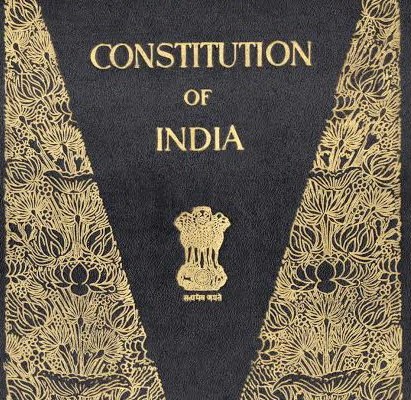
The present article traces how the decision rendered by the apex court in the P.A. Inamdar case led to the 93rd constitutional amendment by the apex court.
In the aftermath of liberalisation, privatization and globalisation; the demand for professional education in India grew manifold. The government has been largely unable to meet this demand. To cater to the accrescent demand, private institutions sprung up. However, this led to the genesis of numerous contentions, largely on account of the socialist approach to the notion of education. The scope of governmental interference, the question of autonomy and regulation of private institutions and effecting an equipoise between the private gains of the people setting up these institutions vis-a-vis the larger public interest were constantly at the fore. Ascertaining the contours of these questions proved especially onerous in cases dealing with minority institutions on account of article 30(1) being attracted.
As seen in the previous blog, the judicial pronouncements in the Pai Foundation and Islamic Academy proved to have limited efficacy in dealing with these questions, on the contrary, they led to a greater deluge of petitions. Such was the extent of ambiguity in Pai Foundation that for the first time since it’s inception, the apex court constituted a constitutional bench to interpret a decision rendered by itself.
Perhaps this ambiguity was owing to the multitude of judicial opinions in the two judgments, in that aspect, the unequivocal judgement in Inamdar eloquently penned by Hon’ble Chief Justice Lahoti arrested the possibility of such judicial dichotomies emanating. The primordial task in front of the present bench was to ascertain the ratio decidendi in the Pai judgment and subject the Islamic Academy judgement to this ratio.
Firstly, Lahoti CJ held article 30(1) to be an additional protection merely styled as a right. This diluted the status of “special right” that CJ Khare had conferred upon it in Islamic Academy.
Pai Foundation had ostensibly departed from the judgement in St. Stephen’s holding 30(1) to be under the ambit of restrictions in interest of national interest. Inamdar authoritatively clarified this position.
Paradoxically, the NRI quota was permitted, which is arguably tantamount to cross subsidization proscribed in Pai Foundation. Even more contentious was the hon’ble court’s decision to uphold the regulatory committees set up in Islamic Academy. The existence of such committees was first seen in the Unnikrishnan case and explicitly invalidated in Pai Foundation. The court justified saying that the committees in Islamic Academy were temporary in nature. This argument is logically untenable since all judicially devised arrangements are superseded when a subsequent legislation is enacted. This was also in derogation of the principle of stare decisis since the court acted contrary to the pronouncement of the 11 judge bench. However, it can be argued that the court could do so in interest of the larger good by virtue of article 142 which empowers it to do in complete interest of justice. The presence of certain regulatory measures do serve the purpose of inhibiting the malaise of profiteering and the like.
Perhaps most importantly, Inamdar prohibited reservation of seats in private unaided institutions. This did not bode well with the political class. Almost the entirety of political parties were unanimous in their repudiation of this aspect of the judgement. Quite understandably, since this decision had the potential of irking the electorate. Thus, in order to circumvent this facet of the judgement, the parliament enacted the 93rd Amendment Act in 2005, which added clause (5) to Article 15 of the constitution-
“(5) Nothing in this article or in sub-clause (g) of clause (1) of Article 19 shall prevent the State from making any special provision, by law, for the advancement of any socially and educationally backward classes of citizens or for the Scheduled Castes or the Scheduled Tribes in so far as such special provisions relate to their admission to educational institutions including private educational institutions, whether aided or unaided by the State, other than the minority educational institutions referred to in clause (1) of Article 30
 Jurisprudence & Lawgic