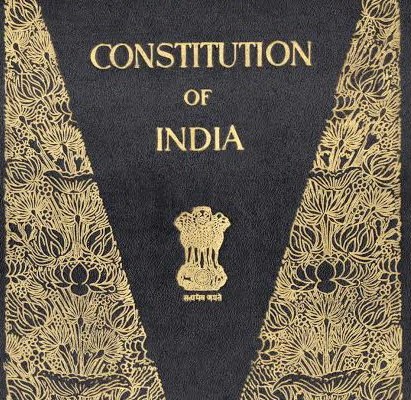
This article summarises the factors that led to the genesis of the basic structure doctrine in the Indian jurisprudence from the very inception of the Indian constitution. The next article will deal with the post Kesavnanda Bharati challenges to the doctrine of basic structure and how the judiciary consequently created a perpetual nichè for the doctrine.
Outstanding feature of the new Constitution: Fundamental Rights
The Indian administration in the fag end of the colonial rule was shepherded under the Government of India Act, 1935 (‘GoI Act’). The preamble of the new constitution marked a clear departure from the limited enfranchisement on the basis of payment of taxes and educational qualifications that had previously existed. A distinguishing feature of the new constitution was the presence of certain fundamental rights enumerated in part three.
Fundamental Rights in Contention by the Executive
It took no longer than fifteen months for scope of these fundamental rights to be contended by the executive. The executive opined that the judiciary had held the fundamental rights to be “so comprehensive as not to render a person culpable even if he advocates murder and other crimes of violence”
Dilatory litigation under the fundamental right to property was inhibiting the government from realising article 46 which envisages affirmative action for promoting the interests of the minorities. Consequently, the first constitutional amendment enunciated that fundamental rights were not applicable when dealing with matters of agrarian reforms. Furthermore, they were placed in the ninth schedule; putting them outside the purview of judicial review.
The First Amendment of the Constitution
The first constitutional amendment placed further “reasonable restrictions” on the fundamental rights. The constitutional validity of these restrictions was ambiguous and prima facie violative of Article 13 which held that any law in contravention to part three was to be void to that extent.
The Shankari Prasad Case
The amendment was challenged in the Supreme Court in the Shankari Prasad case. The elementary question in front of the court was whether article 13 included in its ambit a constitutional amendment and whether a constitutional amendment could abridge the part three.
The View of the Constituent Assembly
Interestingly, this question had been discussed in the constituent assembly debates, wherein, an honourable member, K. Santhanam, moved an amendment to put constitutional laws under the ambit of article 13, the amendment was passed by Sardar Patel. More importantly, this amendment was subsequently dropped out of the final draft. Hence, the ideology of the constituent assembly was to completely insulate part three from the whims and fancies of the government of the day. This fact, however, was never pointed out in the Shankari Prasad case, wherein the court ruled that the power to amend the constitution under article 368 had ascendance over article 13 making the first amendment legally tenable. Conferring the powers on the parliament to amend the Constitution in an unbridled manner.
The Seventeenth Amendment and the Sajjan Singh Case
The seventeenth amendment widened the scope of schedule 9, abridging and stifling the scope of article 14 and 19. This was challenged in the Sajjan Singh case. Justice Hidyatullah upon revisiting and reviewing article 13 and 368, famously said-
“I am not inclined to play a grammarian’s role”
Alluding to the dynamic nature of the constitution as a living document which had to be alive to the needs of the day, hon’ble justice held- “words must yield to principles”
“Basic Structure” is mentioned for the first time in Indian Jurisprudence
In the same case, Justice Mudholkar opined that the “basic structure” of the constitution could never be destroyed.(see: para 63 of the judgement). Albeit, the views of Justice Hidyatullah and Mudholkar were not the majority view of the court, the court had deemed it prudent to revisit the Shankari Prasad case.
Review of the Shankari Prasad Judgement: The Golaknath Case
Consequently, in the Golaknath case, the legal luminary Hon’ble Nani Palkivala argued in front of an eleven judge bench that a “basic structure” and some “implicit restrictions” on the powers to amend the constitution exist. The bench by a razor thin majority of 6:5 ruled in the favour of Palkhivala. CJI Suba Rao held that article 368 simply enumerates the “procedure to amend and not the power to amend”, thus, article 13 should include constitutional laws. The decision was momentous since even the Indian parliament could not make an amendment ultra vires to the constitution. This effectively meant that the fundamental rights could not be transgressed by the parliament.
Parliament seeks to nullify the Golaknath Judgement
The parliament reacted with the 24th and 25th amendment. The 24th amendment seeked to broaden the scope of article 368 and empower the parliament to amend the constitution without any restriction. At the same time, the amendment seeked to dilute the scope of article 13 and keep constitutional amendments out of its purview. The amendments effectively voided the Golaknath judgement. These amendments were subsequently challenged in the Kesavananda Bharati case.
The Kesavananda Bharati Case
The largest bench in the history independent India commenced hearing which went on for sixty six days. Hon’ble Nani Palkhivala once again argued the case. The judges posed a seemingly simple question, albeit, of far reaching ramifications- The meaning of the word “amendment” in article 368. Thus, it is pertinent to note that the entire argument had shifted to the assumption that an “implied limitation” on the amending powers does exist.
Palkhivala’s juniors had informed him that no court in the world had struck down a constitutional amendment. The only weapon in the arsenal was an article by a German professor from Heisenberg University named Dietar Conrad. Professor Conrad had endured the rule of Nazi Germany and studied the post World War II constition of Germany and Japan. A striking feature of these was the eternal, inviolable and inalienable nature of the fundamental rights- safeguarded from the exploits of majority governments. Since such an explicit safeguard was absent from the Indian constitution, Nani advocated for the paramount vitality of certain “implied limitations”
The Importance of Implied Limitations is made Evident
To stress on the indispensability of such implied limitations, Mr. Palkhivala used his excellent advocacy skills to evoke in the minds of the bench, a grim but cogent and conceivable contingency- the possibility of hitlerian amendments by the parliament. The abrogation of article 21, vesting of political paramountcy in the hands of the executive could all be done in a legally tenable manner, on the mere “aid and advise” of the cabinet.
The judges did not concede to the presence of “implied limitations” but by a majority of 7:6 held that the basic structure of the constitution was immutable. This portentous decision cemented a niche for the basic structure doctrine in the Indian jurisprudence.
Notes and References
The crux of this write up has been inspired from a speech delivered by Hon’ble Justice Mr. R.F. Nariman at the Nani Palkhivala Memorial Lecture titled “Guardian Angel of Fundamental Rights”
 Jurisprudence & Lawgic