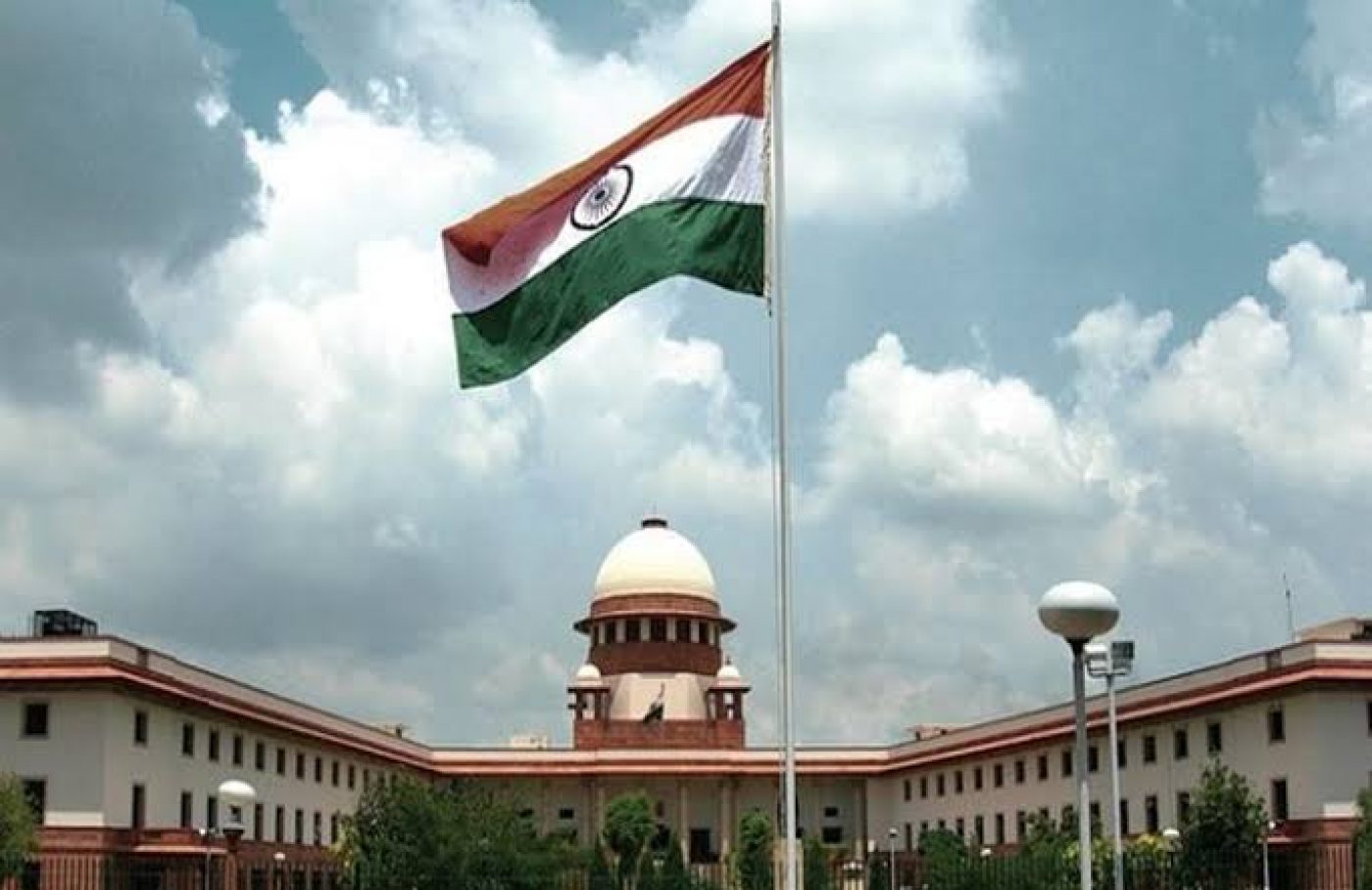
This write up is in continuation to the previous blog and deals with the judgement of the full bench presided by Hon’ble ex CJI Deepak Misra who penned the majority judgement for himself and Hon’ble Mr. Justice A.M. Khanwilkar. Hon’ble Mr. Justice D.Y. Chandrachud adopted a contradictory view to the other two judges comprising the bench.
The ex Chief Justice of India, Honourable Mr. Justice Deepak Misra began his judgement by summarising the case history which led to the case being referred to the current bench.
The genesis of the present lis was the decision rendered by the Supreme Court in Krishna Veni Nagam, the Hon’ble CJI procceded to itemise the decisions cited in the said judgement. In Mona Aresh Goel, the husband instituted the suit at Bombay, the wife pleaded that she had no independent source of income and her parents were not in a position to pay for her and hence seeked to transfer the case from Bombay to Delhi. Her husband did not appear in the subsequent hearing pertaining to the transfer petition and the court decided in her favour. In Lalita A. Ranga the husband did not appear in the court and the wife was in the custody of a small kid, to avoid further inconvenience to the wife, the case was transferred to Jaipur from Bombay. In Neelam Bhatia, the court refused to grant a transfer petition to the wife but instructed the husband to bear the costs for the to and fro travelling expenses of the wife and a person accompanying her. In Vandana Sharma the wife had two young daughters and hence her transfer petition was granted
However, in Anandita Das the Court opined that taking advantage of the leniency shown to ladies by the court, the majority of the transfer petitions were filed by women which necessitated judging each transfer petition on it’s merit in accordance to the facts of the case. Cases pertaining to transfer petitions were not to be disposed off in a routine manner.
The Supreme Court has been empowered to transfer cases under the Constitution by virtue of Article 139A clause 2. It also enjoys statutory jurisdiction for the same by virtue of Article 25 of the Code of Civil Procedure, accordingly rules have been framed and Rule 2 of Order XLI of Supreme Court Rules, 2013 deals with transfer petitions.
The Court, in the present case, observed that time is of essence in a matrimonial dispute. In Bhuwan Mohan Singh the apex Court expressed anguish over the extended length of proceedings as a result of the Courts routinely granting adjournments. The SC observed that in such situations the wife often becomes the worst victim and consequently the law gets totally atrophied. A prolonged lis foments unthinkable and Everestine bitterness and leads to cold refrigeration of hidden feelings, hence dilatory tactics of any party shall be sternly dealt with by the Family Court judge. The judge is not expected to be impatient but wisely anxious and conscious of the situation.
The Hon’ble CJI commented on the legislative intent behind establishing Family Courts is to emphasize on efforts of reconciliation, failing which parties proceed to adjudication. The command on the Family Court is to hold the proceedings in camera if either party so desires.
In matters relating to Custody of children, the welfare of the child is paramount and seminal and has ascendance over the rights of either parents under a statute. The Courts have a proactive role to play in this regard. In Vikram Vir Vohra v. Shalini Bhalla the court ascertained the wishes of the minority child by interviewing him in the absence of his parents, the visitation rights of the father were subsequently made compatible with the education of the child.
Taking recourse to videoconferencing with the view to advance the interest of justice was not a novel endeavour of the SC. In State of Maharashtra v. Praful B. Desai the evidence was recorded via videoconferencing since the witness was in a foreign country. In Kalyan Chandra Sarkar v. Rajesh Ranjan alias Pappu Yadav the Court permitted to conducting the criminal trial under Section 302 of the Indian Penal Code via videoconferencing. However the given pronouncements differ from matrimonial disputes and hence cannot be treated as precedents for the proposition that videoconferencing can be a mode to regulate matrimonial proceedings.
The Indian legal system confers affirmative action on women by virtue of Article 15(2) of the Constitution. It is graphically clear that the Constitutional identity, freedom of choice,dignity of a woman and affirmative rights conferred by the Constitution cannot be abrogated for even a moment. Videoconferencing in matrimonial disputes, it was opined, would scuttle women rights instead of extending them. In Krishna Veni Nagam, the court held that videoconferencing could be employed at instance of either parties wanting so. The hon’ble CJI however held this in contravention to Section 11 of the 1984 Act which explicitly obliges the Court to hold the proceedings in camera at the request of either parties. If the woman does not wish to take recourse to videoconferencing, it would tantamount not only to the contradiction of Section 11 but would also violates the affirmative action conferred on women by the Constitution.
In order to effect a successful reconciliation, the CJI opined, the physical presence of parties at the same place at the same time in order to put the Family Court judge in a position to interact with the parties and foster an atmosphere of confidence and assurance amongst the parties that their confidentiality is absolutely secure. Stressing on the pertinence of privacy the Hon’ble CJI cited excerpts authored by his fellow judge Honourable Mr. Justice D.Y. Chandrachud the landmark case KS Puttaswamy v. Union of India:
“The intersection between ones mental integrity and privacy entitles the individual freedom of thought, the freedom to believe in what is right, and the freedom of self-determination. When these guarantees intersect with gender, they create a private space which protects all those elements which are crucial to gender identity. The family, marriage, procreation and sexual orientation are all integral to the dignity of the individual. And again, Privacy represents the core of the human personality and recognizes the ability of each individual to make choices and to take decisions governing matters intimate and personal”
Alluding to the jurisprudence employed by him to construe the Family Courts Act, the Hon’ble CJI quoted the eminent jurist Benjamin N. Cardozo in Hopkins Savings Association v. Cleary “When a statute is susceptible to two interpretations the Court has to prefer the meaning that preserves to the meaning that destroys.
The schematic purpose of the 1984 Act is speedy settlement and protecting the confidentiality of the proceedings. The Hon’ble CJI cast aspersions on the efficacy of videoconferencing in establishing emotional bonds which could dent the process of reconciliation.
In respect to the second element of the schematic purpose, namely, confidentiality the CJI quoted the judgement rendered by a 9 judge bench in Naresh Shridhar Mirajkar v. State of Maharashtra commenting on fundamental principle of necessity of doing justice wherein after accepting the universally accepted proposition in favor of open court trials, the bench appreciated the necessity of doing justice to the cause and not to defeat it, which necessitates holding of some trials in camera.
The Hon’ble CJI felt that videoconferencing by compromising the confidentiality of the parties will put the very command and spirit of the 1984 Act in peril.
Taking into account the contingency that both the parties consent to using videoconferencing, the Hon’ble CJI advocated adopting a progressive outlook and expanding the commutative expanse of the statutes.
Holding the judgement in Krishna Veni Nagam absolutely unacceptable for contradicting Section 9 and Section 11, an exception was carved out flowing from the scheme of the 1984 Act which empowers the court to modulate it’s proceedings. In matrimonial disputes, the Evidence Act is not strictly applicable and affidavits of formal witnesses are acceptable. in order to inhibit the possibility of the parties illicitly procrastinating the litigation, videoconferencing can be allowed. The Family Court retains the discretion to allow videoconferencing for examination of the witnesses upon failure of the settlement process by judging by analyzing the facts of the matter. As a safeguard for Section 11 of the Family Courts Act, a joint application should be filed before the judge, who then takes the decision based on the factual matrix of the case. However this discretion is exercisable only when the Court arrives at a definite conclusion that a settlement is impossible.
Albeit, not in the present case, transfer petitions are also filed under the Protection of Women from Domestic Violence Act, 2005 and cases registered under the Indian Penal Code. In order of reference to such cases the following conclusions were adverted:
1. Under Section 11 of the 1984 Act, the hearing of the matrimonial dispute may have to be conducted in camera.
2. After the settlement fails and when a joint application is filed or both the parties file their respective consent memorandum for hearing of the case through videoconferencing before the concerned Family Court, it may exercise the discretion to allow the said prayer.
3. After the settlement fails, if the Family Court feels it appropriate having regard to the facts and circumstances of the case that videoconferencing will sub serve the cause of justice, it may so direct.
4. In a transfer petition, video conferencing can NOT be directed.
However, Honourable Dr. Justice DY Chandrachud did not concur with the majority judgment on the following grounds:
The Hon’ble Justice opined that the SC should not set forth a fallacious precedent by excluding the application of technology to facilitate the judicial process. He extolled Modern Technology as a facilitator, enabler and a leveler. It facilitates access to justice and the 1984 Act is no exception to this principle. The facility is extensively employed in diverse fields like online teaching, meeting, negotiation, telemedicine, etc. it reduces time, cost, carbon footprint and the like.
Acknowledging the apprehensions that videoconferencing contradicts Section 11 Hon’ble Justice Chandrachud pointed out that is not the case and it does not negate the provision of an in camera trial since the proceedings do not have to be necessarily recorded nor are they accessible to the media or public.
Videoconferencing can prove to be especially useful in situations where the spouses do not wish to be in the same room as the other, this is a possibility when there are serious allegations of marital abuse, in such a scenario videoconferencing accords the things to be resolved from the safety of a remote place.
Furthermore it helps negate the power asymmetry by ensuring that the powerful party cannot partake in dilatory tactics by not appearing in the Court on the basis of frivolous excuses.
A body of precedent had evolved since the High Court had permitted using videoconferencing in familial disputes, hence the questions pertaining to the intricacies of how and when it is to be employed in a lis is best left for the High Courts to decide since they have a better understanding of the situation.
Exclusion of videoconferencing in the settlement process is not mentioned explicitly or implicitly by the legislation and impedes access to justice. Worse it accentuates the possibility of spouses causing interminable delays which defeat the purpose for which the Family Courts have been set up.
This author is of the view that the Indian judicial system which is already over burdened and under staffed to tackle the over growing pending cases that inundate the Courts daily should venture to inculcate technology to the greatest extent possible in order to further the cause of justice. Technological advancements should be embraced rather than being gazed scornfully and rejected by aid of some technicality arising because of narrow interpretation of the statutes. To keep pace with the contemporary legal ecosystem it is pertinent that modern techniques are adopted and etched in the institutional memory of the Courts with alacrity to ensure seamless integration in the judicial system and redressing any novel loopholes that may appear by virtue of it.
 Jurisprudence & Lawgic